
The Great Namibian Journey is a mobile safari that combines luxury fixed camps with exclusive trails camps. Such camps are always located in private concessions, ensuring not only private accommodation but also meeting other Wilderness Safaris guests.
Trails camps feature an innovative Meru-style tent with a hexagonal shape, walk-in structure and en-suite separate toilet and shower areas. The interiors of the tents have been redesigned to create a sense of stepping back in time, with flowing linen of pure cottons and essential "old style" finishes.
Paraffin hurricane lanterns and a crackling campfire set the evening camp ambience. Fresh, sumptuous meals are usually prepared around a fire by safari staff, and the dining area is under stars (although a canopy dining tent is always erected), creating that matchless 'camping wilderness' experience. A small reference library is also provided.
This safari is designed to bring the guest closer to nature; it is specially outfitted to ensure the camping feel with a clear emphasis on necessary and stylish comfortable interiors. This warm, inviting atmosphere, with its lantern-lit meals and cheerful campfire, is complemented by the comfort and added luxury of the permanent lodges visited.
Day 1 & 2 Sossusvlei | Meals: BLDTrails camps feature an innovative Meru-style tent with a hexagonal shape, walk-in structure and en-suite separate toilet and shower areas. The interiors of the tents have been redesigned to create a sense of stepping back in time, with flowing linen of pure cottons and essential "old style" finishes.
Paraffin hurricane lanterns and a crackling campfire set the evening camp ambience. Fresh, sumptuous meals are usually prepared around a fire by safari staff, and the dining area is under stars (although a canopy dining tent is always erected), creating that matchless 'camping wilderness' experience. A small reference library is also provided.
This safari is designed to bring the guest closer to nature; it is specially outfitted to ensure the camping feel with a clear emphasis on necessary and stylish comfortable interiors. This warm, inviting atmosphere, with its lantern-lit meals and cheerful campfire, is complemented by the comfort and added luxury of the permanent lodges visited.
From Windhoek, travel by vehicle approximately 380km to Kulala Wilderness Camp, enjoying awe-inspiring views of the mountains and the desert floor - on a clear day you can see the fog banks of the Skeleton Coast. En route, we enjoy a lunch close to the Khomas Hochland escarpment with its sweeping vistas.
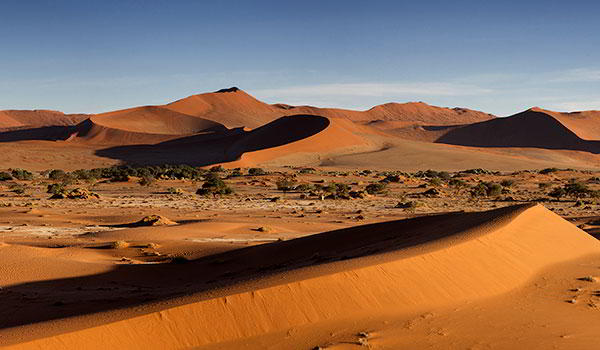
One of the most enduring impressions of this area is the early morning light on the sea of vivid orange dunes of Sossusvlei, some as high as 300 metres. Afternoon activities include nature walks, drives to scenic viewpoints and marvelling at the unique Namib fauna and flora in the private Kulala Wilderness Reserve.
Kulala Wilderness Camp lies at the foot of a mountain facing west to catch the majestic Namibian sunsets. It comprises 9 tents on elevated wooden decks which are linked to the main dining room, bar, reception area and swimming pool by pathways. On the edge of the oldest desert in the world, wildlife here is sparse but fascinating. Sightings of animals such as springbok, gemsbok, ostrich, bat-eared fox and aardwolf are exciting in these rugged conditions.
Kulala Wilderness Camp
Day 3 & 4 Swakopmund | Meals: BLD
Travel 280km by road north-west via the Kuiseb Canyon with its dark, craggy canyons and via a moon-like landscape of flat gravel plains (with stops along the way that include viewing the extraordinary Welwitschia plants). We arrive at the grand Hansa Hotel in Swakopmund in the late afternoon.
On our second day we explore the ice-blue Atlantic coast, from the port towns of Walvis Bay and Swakopmund to its incredible marine mammals. A private boat cruise at Walvis Bay and down the coast to Sandwich Harbour (weather permitting) provides a unique chance to see the diverse pelagic (ocean-going) birdlife, Cape fur seals and rare Heaviside's dolphins up close. This activity is rounded off with a private seafood lunch, before returning to the hotel in the afternoon. The remainder of the afternoon is at leisure to explore the charming town of Swakopmund before meeting in the evening for dinner.
The grand three-star Hansa Hotel forms part of Swakopmund's architectural culture and dates back to 1905; it is said to be one of the oldest buildings in the town. It is ideally situated in the centre of Swakopmund within easy walking distance of town and the beach. The luxury of the hotel, its excellent cuisine and friendly service are well known and appreciated countrywide and overseas.
Hansa Hotel
Day 5 Damaraland | Meals: BLD
Travel approximately 280km, partly up the legendary Skeleton Coast (named for the numerous shipwrecks the treacherous shores have claimed over the years) to the Cape Cross seal colony with thousands of Cape fur seals. (We'll visit Cape Cross only if we have not seen large populations of seals on the boat cruise from Walvis Bay.) From here we drive the back roads through the game productive Ugab riverbed, travelling north past the Brandberg Mountain - the second largest monolith on earth - to Damaraland.
This all-day excursion with lunch en route ends with our arrival at Damaraland Camp. Damaraland is a land of stark desert beauty. Early morning mists, generated by the clash between the icy Atlantic Ocean and the warm desert air of the Skeleton Coast, drift inland along the canyons, providing sustenance to the flora and fauna of the region. Rare succulent plants abound in this harsh countryside. Our activities include explorations on foot, by mountain bike or 4x4 vehicles, viewing springbok, gemsbok and ostrich, and tracking the unique desert-adapted elephant.
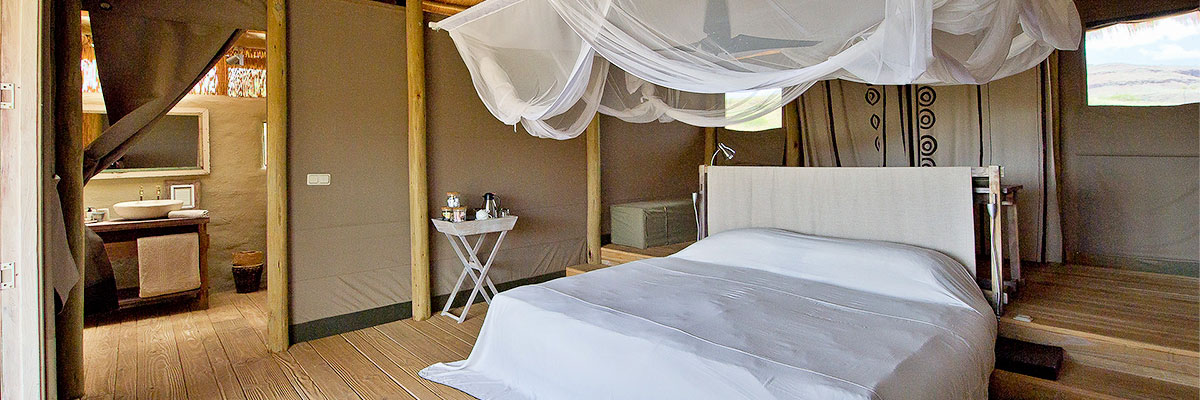
Damaraland Camp accommodates guests in 10 comfortable tented rooms, with en-suite facilities including flush toilets and showers with hot and cold running water. The dining room and pub are combined under canvas, and an open fire is enjoyed on calm evenings. A lovely feature of the camp is its unique rock pool.
Damaraland Camp
Damaraland Camp is a rare venture which integrates communities, the environment and sustainable wildlife and is rated as the most successful ecotourism venture in Namibia. Located on the north bank of the Huab River Valley, 90 kilometres inland from Torra Bay on Namibia's Skeleton Coast, the camp presents endless vistas across stark plains, ancient valleys and soaring peaks. The brooding mass of the Brandberg provides a focal point, almost 100 kilometres to the south. Early morning mists, generated by the meeting of the icy Atlantic and the warm land mass along the Skeleton Coast, drift inland along the river line, providing sustenance to varied life forms. The river flows only once or twice during the short rainy season, seldom breaking through the dunes to the ocean.
Damaraland Camp was rated as one of the top destinations of the 'Ultimate Safari' in the March 1999 issue of Conde Nast Traveler.
Camp Description Nine large comfortable walk-in tents with doors. All tents have valley views and each has en suite facilities and a covered veranda. The main living area made from local rock and canvas combines the dining room, lounge and bar. A feature of the camp is a stunning rock plunge pool tucked away in a mini gorge behind the camp. Dinner can be enjoyed in an open air "kraal" under a million stars.
Game Viewing The natural laws of food and water availability dictate the movement and cycles of the rare and endangered desert Elephant, Black Rhinoceros, Oryx, Kudu, Springbok and other species that have come to terms with life in a desert environment. Even Lion and Cheetah move in and out of the area occasionally.
Activities Activities revolve around nature drives into the Huab River System in search of Desert Elephants and other specially adapted flora and fauna. Walking in the Damaraland area is spectacular and is highly recommended as an afternoon activity. With prior notice, a trip can be arranged to the famous Twyfelfontein rock engravings located nearby. A full day excursion is available to track the endangered Desert Adapted Black Rhino subject to the availability of a vehicle. Private vehicles for these excursions can be booked at an additional cost subject to availability either prior to departure or directly with the Camp Manager.
The Torra Conservancy Damaraland was voted in the top three of all eco-tourist projects around the world by the British Travel Writers guild. It is situated in the mountainous region in north~west Namibia inhabited by the Damaras and named after them. Originally, it was an area occupied primarily by the Damara people, but it soon became the home of other tribes such as the Hereros and the displaced Riemvasmakers of South Africa. Today, many residents of Damaraland are thus of mixed heritage, but most consider themselves Damara. The Damara name is derived from the Nama word "Dama", meaning "who walked here". This is because the Damara were known to the Nama people by the footprints they left around waterholes. From their vantage point in the mountains, the Damara were quick to spot resources such as water or animals, on the plains below, and they were therefore able to be the first groups to reach these essential resources. The Damaraland community comprises a unique group of people who have recognised the value of the wildlife on their land and formed a Community Wildlife Conservancy to protect it. Until 1981, Damaraland was unprotected and open to poachers, mostly from outside the area. Eventually, Namibian NGO's formed a game-guard system with people from the community, and interest in the welfare of the wildlife increased. After halting the poaching activities, there were many ideas on how to conserve the area and its resources sustainably. In 1996, Wilderness Safaris joined the community's conservation efforts and co-established what is now the most successful community based tourism venture in Namibia. In 1998, the success of Damaraland Camp helped the community to have their land proclaimed as the Torra Conservancy. It is now the leader of four Community Wildlife Conservancies in the country. Today, the Torra Conservancy is one of the most successful in all of Africa. It meets all its management costs and makes a profit which is then re-invested into community projects for their benefit. It is the first community conservancy which is able to sustain itself without donor funding.
×
Day 6 & 7 Desert Rhino Camp, Damaraland | Meals: BLD
We depart Damaraland Camp and drive into the Huab riverbed to search for desert-adapted elephants, before heading north to the mountainous and rocky paradise of the massive Palmwag Concession.
Desert Rhino Camp is situated in the enormous private Palmwag Reserve in north-west Namibia, between Etosha and the Skeleton Coast - few places on the planet can offer this level of privacy and wilderness experience. This concession has a number of freshwater springs that support healthy populations of animals including desert-adapted back rhino and elephant as well as large populations of the rare Hartmann's mountain zebra, giraffe, gemsbok, springbok and kudu. The predator population is the largest outside of the Etosha National Park including lion, cheetah, leopard, and brown and spotted hyaena. Birdlife is prolific and diverse featuring many of Namibia's endemics. Welwitschia mirabilis (ancient, endemic cone-bearing plants) dot the plain in front of the camp. The speciality of the area is its growing population of the rare desert-adapted black rhino (the largest concentration in the world outside a national park), which are monitored and protected by the Save the Rhino Trust.
Desert Rhino Camp accommodates guests in 7 large East African-style Meru tents, each with an en-suite bathroom and a classic bucket shower that is filled with hot water whenever needed. Lights are powered by solar panels and the tented dining room offers uninterrupted views of the desert and mountains. On the second day, the highlight is rhino tracking on foot or by vehicle; other activities include day and night nature drives.
Desert Rhino Camp
Day 8 & 9 Etosha National Park | Meals: BLD
We depart Palmwag eastward on an extended combination wildlife viewing (first part of the drive) and transfer drive of approximately 350km to Etosha National Park, where we experience the pinnacle of game viewing - but accommodated in the privacy of an exclusive bush camp situated on an extensive private game reserve, Ongava, just on the outside of Etosha. Activities include day and night drives, walks and hides. Within Etosha we visit numerous perennial springs and pans, encountering a myriad of differing species.
Ongava Tented Camp comprises 10 large comfortable walk-in tents, each with en-suite facilities, including flush toilet and a hot shower. All meals are enjoyed in the thatched dining area that overlooks an active waterhole. There is a small pool in which to cool off as well.
Ongava Tented Camp
Ongava Game Reserve on the southern boundary of Namibia's Etosha National Park has two camps; the main lodge, and the tented camp in a different part of the reserve. Guests can choose the style of accommodation and size of camp that suits them best. The camps are managed independently and each has its own full~time staff, guides, managers and vehicles. Both camps will have a similar activity schedule. Ongava Tented Camp is situated more towards the centre of the game reserve, at the base of the foothills of the Ondundozonanandana Range, meaning "mountain where the boy took the calves".
Camp Description
Ongava Tented Camp is a small classic traditional tented camp. Guests sleep in "Meru" tents which are the classic East African style of tent. Each have double doors to allow for uninterrupted views of the bush and waterhole in front of camp and every tent has it's own covered verandah. The tents have been tastefully furnished each with it's own ensuite thatched bathroom with flush toilet and unique open air private shower. The bar and dining area is built out of rock and thatch and has an intimate feel. Drinks and dinner can be enjoyed around the open air fire place and swimming pool, both of which overlook a productive floodlit waterhole situated at eye level in front of the camp.
Game Viewing
Etosha is Namibia's premier game viewing destination. It is one of Africa's largest game parks being nearly the size of Switzerland. Large herds of plains game concentrate around the waterholes in the dry season making for exciting game viewing. Species that can be seen year round include Elephant, Lion, Leopard, Cheetah, Giraffe, Zebra, Wildebeast, Springbok, Oryx, Kudu and the Diminuative Damara Dik-Dik. Birdlife is also good with Ostrich and raptors in abundance. Local specials include the Short-toed Rockthrush, Hautlaubs Francolin, Rockrunner, Ruppells Parrot, White-tailed Shrike and Chesnut Weaver. A highlight at Ongava is that it is one of the few private game reserves in Southern Africa where you have a chance of seeing both Black and White Rhino. White Rhino can be trekked on foot. Ongava Game reserve also has a good population of Lion, Eland, Mountain Zebra, Black Faced Impala and a number of other anteloppe species.
Activities
Mornings are normally spent within Etosha and afternoons on the reserve, tracking white Rhino on foot being one of the many highlights. Aditional activities could also include full day excursions into Etosha National Park, taking along a picnic, subject to availability of vehicles. Night drives on Ongava Reserve and visits to one of the hides on the property. Private vehicles can be booked at an additional charge subject to availability either proir to departure or directly with the Camp Manager.
Our Neighbour Etosha
Etosha was first proclaimed in 1907. The park stretched all the way to the Skeleton Coast and, up to 1967, was the world's largest park. In 1967, the park's size was slashed from nearly 10 million hectares to its current size of 2.7 million hectares (about the size of Switzerland). In the early 1990s a group of Namibian, English, American and South African partners clubbed together and bought 30,000 hectares of land on Etosha's southern boundary. The aim of this venture was to create Namibia's finest private game reserve and to create a buffer for Etosha along its southern boundary. Ongava (meaning rhinoceros in Herero) was born, and a massive rehabilitation and restocking programme took place. White Rhino were introduced and over time Black Rhino migrated onto the reserve. Many thousands of animals are now found on Ongava including Elephant, Giraffe, Gemsbok (Oryx), Springbok, Red Hartebeest, Eland, Wildebeest, Zebra and the rare Blackfaced Impala. Lion, Leopard and cheetach have also moved back onto Ongava.
×
Day 10 - 12 Skeleton Coast Research Camp | Meals: BLD
Enjoy a breathtaking scenic flight over dramatic desert landscapes to the exclusive Skeleton Coast Research Camp situated in a private concession in the Skeleton Coast Park. This is one of the most inhospitable but hauntingly beautiful places on the planet: desolate and uninhabited. It has everything, from roaring sand dunes, windswept plains, towering canyons and saltpans to seal colonies and shipwrecks. Full-day explorations in 4x4 Land Rovers will take all these in, picnicking on the way. Included are cultural visits to the remote villages of the Himba people. Skeleton Coast Research Camp comprises 5 Meru-style tents nestled between granite rocks. Surrounded by pure wilderness, this camp is truly remote and the perfect setting for a serviced style of camping. The camp is outfitted with necessary comforts and equipment, essential elements to the old and relaxed manner of early explorers.
Skeleton Coast Camp
Day 13 Windhoek
Say farewell to the adventure as we return by air charter to Windhoek, arriving at approximately 4pm late afternoon.