
Day 1 Depart USA
Depart the USA on your overnight flight to London.
Day 2 Enroute
Arrive in London early this morning, where day rooms are available for freshening up. Later this evening, depart on the overnight flight to Lusaka.
The only Heathrow Airport hotel with direct access to Terminal 4 via a covered walkway, the Hilton London Heathrow Airport hotel is just 20 minutes by train from central London. Dine in style at a choice of 3 restaurants, hold a meeting for 2-300 or relax in the pool and luxury health club.
Sleep easy in this contemporary 24m� room with air-conditioning and soundproofed windows. Catch up on work at the large desk with high-speed internet access or relax in the easy chair. Special touches include in-room magazines.
Room Amenities:
×
Day 3 Arrive Lusaka-South Luangwa | Meals: D
Arrive in Lusaka early this morning. Welcome to Zambia! After you have cleared customs and immigration, you'll be met and transferred for the short light aircraft flight to Mfuwe International Airport. Your guide awaits at the airport for a scenic drive to your camp overlooking the Luangwa River. You'll have time to settle in and enjoy lunch or afternoon tea (depending on what time you arrive). Later this evening, enjoy a night game drive.
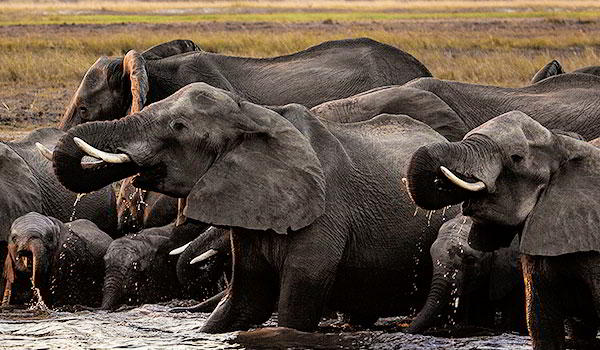
NKWALI CAMP is located on Robin's private land, overlooking the National Park. The land is superb gameviewing country, with a beautiful area of ebony woodland and open grass plains. Elephants often cross the Luangwa, seen from the bar, or come to the waterhole near the thatched dining room. The chalets are cool and spacious, overlooking the river. Access to the park is through the main entrance over the bridge, by boat or by our nearby pontoon. The area is famous for leopard and giraffe sightings.
* 12 guests
* en suite bathrooms
* open all year
* walking, drives, night drives
×
Day 4 South Luangwa | Meals: BLD
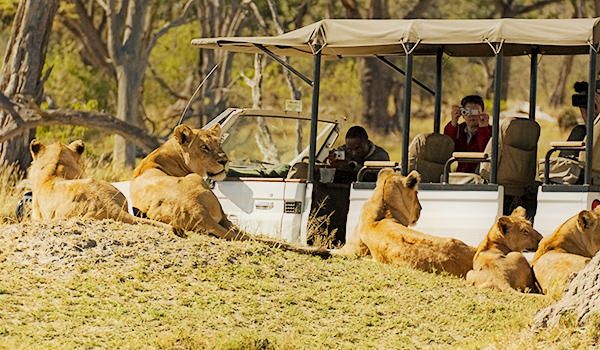
Enjoy a hot bowl of porridge around the campfire at dawn before setting out on your morning game drive or walk. South Luangwa National Park is the largest of four parks in the Luangwa Valley. The valley is a rift valley similar to that in East Africa, although it is believed to be older. Thanks to its rich volcanic soil, the valley has a rich, diversified vegetation - which in turn supports a large number of herbivores. On your game drives or walks, you might spot some of the animals that are unique to this area, like puku, which is one of the smaller types of antelopes. Return to the camp around mid-day for lunch and perhaps a siesta before a night game drive to take a peek into the nocturanal animal world.
NKWALI CAMP is located on Robin's private land, overlooking the National Park. The land is superb gameviewing country, with a beautiful area of ebony woodland and open grass plains. Elephants often cross the Luangwa, seen from the bar, or come to the waterhole near the thatched dining room. The chalets are cool and spacious, overlooking the river. Access to the park is through the main entrance over the bridge, by boat or by our nearby pontoon. The area is famous for leopard and giraffe sightings.
* 12 guests
* en suite bathrooms
* open all year
* walking, drives, night drives
×
Day 5 South Luangwa | Meals: BLD
Choose your activity for today. You might want to take a picnic lunch and explore further afield in the park. Another "special" animal to watch for is the Thornicroft's giraffe. These giraffe differ from the Maasai or Rothschild's giraffe - their legs below their knees are almost white and their faces are quite light or white. The main part of their body is covered in dark patches, while their neck is covered in lighter patches.
NKWALI CAMP is located on Robin's private land, overlooking the National Park. The land is superb gameviewing country, with a beautiful area of ebony woodland and open grass plains. Elephants often cross the Luangwa, seen from the bar, or come to the waterhole near the thatched dining room. The chalets are cool and spacious, overlooking the river. Access to the park is through the main entrance over the bridge, by boat or by our nearby pontoon. The area is famous for leopard and giraffe sightings.
* 12 guests
* en suite bathrooms
* open all year
* walking, drives, night drives
×
Day 6 South Luangwa-Livingstone | Meals: BLD
Bid farewell to the Luangwa Valley and board your light aircraft flight to Livingstone (via Lusaka). Upon arrival, you will be met and transferred to your lodge overlooking the Zambezi River. This afternoon, choose from a variety of activities - perhaps a sundowner cruise on the Zambezi?
The River Club is situated on the Zambian side of the Zambezi River, 18 kilometres upstream from Victoria Falls. It faces westward into the sunset and onto the Zambezi National Park on the opposite side of the river. The River Club is set among the lush riverine vegetation and the camp has a distinct Edwardian flavour. Guests here can enjoy the sights and sounds of Victoria Falls and the Zambezi River in a peaceful and tranquil setting away from the crowds.
Ten luxury thatched chalets accommodate a maximum of 20 people. The rooms overlook the Zambezi River, and have en suite facilities including a bath, shower, toilet and basin. Two honeymoon suites are available. All the rooms have fans. The main house comprises the dining room, lounge and pub area, and has an interesting library. The swimming pool has a magnificent view over the river for those who wish to relax in the sun. Guests may stay here either under an all~inclusive rate, or on a dinner, bed and breakfast basis.
Peter Jones is the owner and lives at River Club. He is a Zambian who designed and built the lodge.
×
Day 7 Livingstone | Meals: BLD
Rain slickers are appropriate as you start the day with a tour of nearby thundering Victoria Falls! Every minute over 144 million gallons of water cascade down 324 feet to the Zambezi river below. After a tour of the Falls, you may wish to visit nearby Mukuni Village where you can see first hand the local way of life.
The River Club is situated on the Zambian side of the Zambezi River, 18 kilometres upstream from Victoria Falls. It faces westward into the sunset and onto the Zambezi National Park on the opposite side of the river. The River Club is set among the lush riverine vegetation and the camp has a distinct Edwardian flavour. Guests here can enjoy the sights and sounds of Victoria Falls and the Zambezi River in a peaceful and tranquil setting away from the crowds.
Ten luxury thatched chalets accommodate a maximum of 20 people. The rooms overlook the Zambezi River, and have en suite facilities including a bath, shower, toilet and basin. Two honeymoon suites are available. All the rooms have fans. The main house comprises the dining room, lounge and pub area, and has an interesting library. The swimming pool has a magnificent view over the river for those who wish to relax in the sun. Guests may stay here either under an all~inclusive rate, or on a dinner, bed and breakfast basis.
Peter Jones is the owner and lives at River Club. He is a Zambian who designed and built the lodge.
×
Day 8 Livingstone-Okavango Delta | Meals: BLD
A light aircraft flight takes you over the Falls as you fly to Kasane and then to your intimate camp deep in the Okavango Delta. From your birds-eye vantage point, you get your first glimpse of the wetland paradise spread out below.
Day 9 Okavango Delta | Meals: BLD
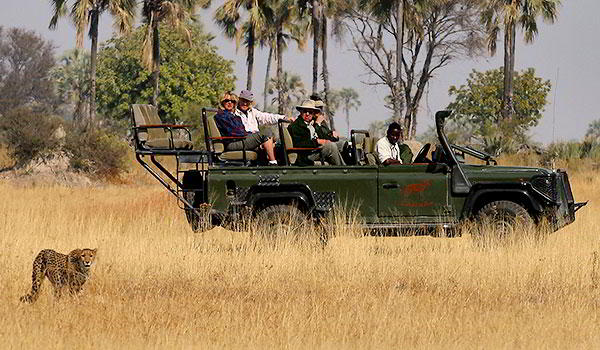
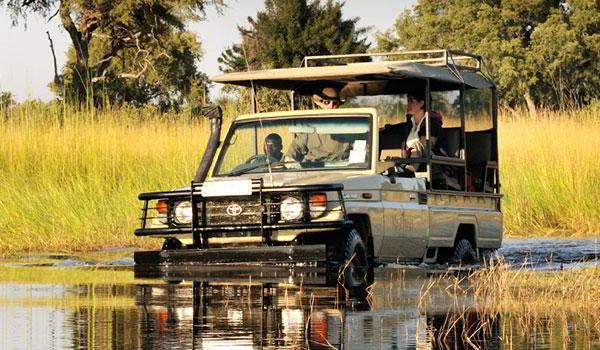
Days are unstructured in the Delta. Depending on the water levels, you might choose to game view by water or by land. Some camps offer game walks, a super way to gain a different insight into the wildlife of the area.
Day 10 Okavango Delta | Meals: BLD
A final day in the Delta allows time for your choice of game viewing activity.
Day 11 Okavango Delta-Depart | Meals: B
Bid farewell to this amazing labyrinth of channels as your light aircraft flight takes you to Maun where you continue to Johannesburg and then overnight to London.
Day 12 Arrive USA
Arrive in London this morning and connect to your flight to the USA, arriving back later today.
Depart the USA on your overnight flight to London.
Day 2 Enroute
Arrive in London early this morning, where day rooms are available for freshening up. Later this evening, depart on the overnight flight to Lusaka.
Heathrow Hilton
The only Heathrow Airport hotel with direct access to Terminal 4 via a covered walkway, the Hilton London Heathrow Airport hotel is just 20 minutes by train from central London. Dine in style at a choice of 3 restaurants, hold a meeting for 2-300 or relax in the pool and luxury health club.
Sleep easy in this contemporary 24m� room with air-conditioning and soundproofed windows. Catch up on work at the large desk with high-speed internet access or relax in the easy chair. Special touches include in-room magazines.
Room Amenities:
- Hair Dryer
- Radio
- Tea and Coffee Making Facilities
- TV
- TV Games
- Air Conditioning
- Data Port
- Desk
- Teletext TV
- Trouser Press
- High Speed Internet Access
×
Day 3 Arrive Lusaka-South Luangwa | Meals: D
Arrive in Lusaka early this morning. Welcome to Zambia! After you have cleared customs and immigration, you'll be met and transferred for the short light aircraft flight to Mfuwe International Airport. Your guide awaits at the airport for a scenic drive to your camp overlooking the Luangwa River. You'll have time to settle in and enjoy lunch or afternoon tea (depending on what time you arrive). Later this evening, enjoy a night game drive.
Nkwali Camp
NKWALI CAMP is located on Robin's private land, overlooking the National Park. The land is superb gameviewing country, with a beautiful area of ebony woodland and open grass plains. Elephants often cross the Luangwa, seen from the bar, or come to the waterhole near the thatched dining room. The chalets are cool and spacious, overlooking the river. Access to the park is through the main entrance over the bridge, by boat or by our nearby pontoon. The area is famous for leopard and giraffe sightings.
* 12 guests
* en suite bathrooms
* open all year
* walking, drives, night drives
×
Day 4 South Luangwa | Meals: BLD
Enjoy a hot bowl of porridge around the campfire at dawn before setting out on your morning game drive or walk. South Luangwa National Park is the largest of four parks in the Luangwa Valley. The valley is a rift valley similar to that in East Africa, although it is believed to be older. Thanks to its rich volcanic soil, the valley has a rich, diversified vegetation - which in turn supports a large number of herbivores. On your game drives or walks, you might spot some of the animals that are unique to this area, like puku, which is one of the smaller types of antelopes. Return to the camp around mid-day for lunch and perhaps a siesta before a night game drive to take a peek into the nocturanal animal world.
Nkwali Camp
NKWALI CAMP is located on Robin's private land, overlooking the National Park. The land is superb gameviewing country, with a beautiful area of ebony woodland and open grass plains. Elephants often cross the Luangwa, seen from the bar, or come to the waterhole near the thatched dining room. The chalets are cool and spacious, overlooking the river. Access to the park is through the main entrance over the bridge, by boat or by our nearby pontoon. The area is famous for leopard and giraffe sightings.
* 12 guests
* en suite bathrooms
* open all year
* walking, drives, night drives
×
Day 5 South Luangwa | Meals: BLD
Choose your activity for today. You might want to take a picnic lunch and explore further afield in the park. Another "special" animal to watch for is the Thornicroft's giraffe. These giraffe differ from the Maasai or Rothschild's giraffe - their legs below their knees are almost white and their faces are quite light or white. The main part of their body is covered in dark patches, while their neck is covered in lighter patches.
Nkwali Camp
NKWALI CAMP is located on Robin's private land, overlooking the National Park. The land is superb gameviewing country, with a beautiful area of ebony woodland and open grass plains. Elephants often cross the Luangwa, seen from the bar, or come to the waterhole near the thatched dining room. The chalets are cool and spacious, overlooking the river. Access to the park is through the main entrance over the bridge, by boat or by our nearby pontoon. The area is famous for leopard and giraffe sightings.
* 12 guests
* en suite bathrooms
* open all year
* walking, drives, night drives
×
Day 6 South Luangwa-Livingstone | Meals: BLD
Bid farewell to the Luangwa Valley and board your light aircraft flight to Livingstone (via Lusaka). Upon arrival, you will be met and transferred to your lodge overlooking the Zambezi River. This afternoon, choose from a variety of activities - perhaps a sundowner cruise on the Zambezi?
The River Club
The River Club is situated on the Zambian side of the Zambezi River, 18 kilometres upstream from Victoria Falls. It faces westward into the sunset and onto the Zambezi National Park on the opposite side of the river. The River Club is set among the lush riverine vegetation and the camp has a distinct Edwardian flavour. Guests here can enjoy the sights and sounds of Victoria Falls and the Zambezi River in a peaceful and tranquil setting away from the crowds.
Ten luxury thatched chalets accommodate a maximum of 20 people. The rooms overlook the Zambezi River, and have en suite facilities including a bath, shower, toilet and basin. Two honeymoon suites are available. All the rooms have fans. The main house comprises the dining room, lounge and pub area, and has an interesting library. The swimming pool has a magnificent view over the river for those who wish to relax in the sun. Guests may stay here either under an all~inclusive rate, or on a dinner, bed and breakfast basis.
Peter Jones is the owner and lives at River Club. He is a Zambian who designed and built the lodge.
×
Day 7 Livingstone | Meals: BLD
Rain slickers are appropriate as you start the day with a tour of nearby thundering Victoria Falls! Every minute over 144 million gallons of water cascade down 324 feet to the Zambezi river below. After a tour of the Falls, you may wish to visit nearby Mukuni Village where you can see first hand the local way of life.
The River Club
The River Club is situated on the Zambian side of the Zambezi River, 18 kilometres upstream from Victoria Falls. It faces westward into the sunset and onto the Zambezi National Park on the opposite side of the river. The River Club is set among the lush riverine vegetation and the camp has a distinct Edwardian flavour. Guests here can enjoy the sights and sounds of Victoria Falls and the Zambezi River in a peaceful and tranquil setting away from the crowds.
Ten luxury thatched chalets accommodate a maximum of 20 people. The rooms overlook the Zambezi River, and have en suite facilities including a bath, shower, toilet and basin. Two honeymoon suites are available. All the rooms have fans. The main house comprises the dining room, lounge and pub area, and has an interesting library. The swimming pool has a magnificent view over the river for those who wish to relax in the sun. Guests may stay here either under an all~inclusive rate, or on a dinner, bed and breakfast basis.
Peter Jones is the owner and lives at River Club. He is a Zambian who designed and built the lodge.
×
Day 8 Livingstone-Okavango Delta | Meals: BLD
A light aircraft flight takes you over the Falls as you fly to Kasane and then to your intimate camp deep in the Okavango Delta. From your birds-eye vantage point, you get your first glimpse of the wetland paradise spread out below.
Accommodation Choices
- Okavango Delta: Chitabe Camp
Chitabe Camp
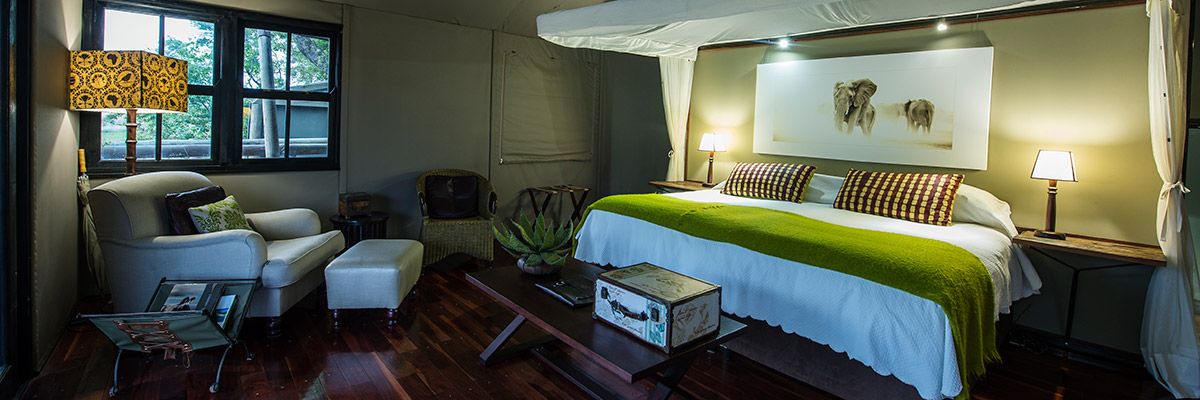
Chitabe (pronounced Chitaabee) is located in a 28000 hectare photographic reserve alongside the Moremi Game Reserve. The reserve's boundary in the east is the Gomoti Channel and the Santantadibe River in the west. The area is made up of a superb variety of habitats, which include waterways and marshlands, dry acacia and mopane woodland, riverine areas, open grasslands and seasonally flooded plains. Chitabe has the classic Okavango scenery. Chitabe offers guests game drives in open 4x4 vehicles during the day and at night, as well as nature walks. This is not a water activities camp. Chitabe has been operational since 1997 and has developed an outstanding reputation.
The camp itself is situated on one of the most beautiful islands in the Delta. Surrounded by ancient ebony, leadwood and sausage trees, Chitabe offers eight luxurious, twin-bedded, East African style tents, built on elevated wooden decks under a lush canopy of indigenous trees. Each luxury tent has en suite facilities with hot and cold running water. A separate thatched dining room, pub, lounge and pool area is linked by raised walkways. The raised decks offer superb views over the open floodplain in front of the camp.
Wildlife seen here includes Elephant, Buffalo, Lion, Leopard and Cheetah. Wild Dog are among the major game attractions of the area. Guests should also see Zebra, Reedbuck, Red Lechwe, Impala, and all the plains game. Night drives can be very rewarding, giving rare opportunities to view animals such as Pangolin, Civet Cat, Genet Cat, Porcupine and Aardwolf.
Chitabe (and Chitabe Trails) is owned by Dave and Helene Hamman, two well-known and respected characters in the Okavango. Dave and Helene have managed a number of camps in Botswana. It was during their time at Mombo that they really became enthusiastic about wild dogs. They got to know individual dogs and started to follow them on a daily basis and learnt more of their life histories, their trials and tribulations. Three years later they co-produced the book Running Wild ~ Dispelling the Myths of the African Wild Dog, the definitive book on these wonderful animals. Dave's passion for photography and his knowledge of the dogs made him the logical choice to be the cameraman for National Geographic's documentary on the wild dog of the Okavango.
They have moved on from Mombo and now have built and own Chitabe - camps which are in an area where wild dog are regularly sighted. Helene oversees the day to day operation from their Maun base, while Dave still spends much of his time on assignment with National Geographic's photographers.
Wild Dog Conservation Fund
A portion of the accommodation charges from each guest goes towards a wild dog conservation fund which Chitabe has established. Dr Tico McNutt began the wild dog research project in 1989, with a study area of about 3000 square kilometers. About 160 wild dogs in ten to twelve packs inhabit this region. Chitabe is part of this study area.
×
Jacana
Jacana
Camp Description
Jacana Camp is situated about 25kms west of Mombo, outside the Moremi Game reserve on the Jao flats - a reserve of 60,000 hectares. It is a true water camp and offers mokoro and walking safaris all year round. As the floodwaters recede game driving and night drives in open 4x4 land rovers are available from October to March. Jacana Camp has five small meru-style tents accommodating a maximum of eight guests. Each tent is on a wooden deck overlooking the floodplains and has an en suite bathroom with flush toilet and shower. The main dining area is on the top floor of an elevated wooden deck between two magnificent sycamore figs and surrounded by dense wild date palms. Downstairs, there is a cosy pub and lounge with an area for an open fire under the stars.
Game Viewing
The camp is set in one of the most densely populated wetland areas for Sitatunga and Red Lechwe. Hippos and crocodiles are regularly sited. In the dry season on the floodplains wildebeest and zebra occur and in the woodlands to the west, Elephant and Buffalo. Lions, Cheetah, Leopard and Wild Dog are occasionally sited on the floodplains. This is a prime area for wetland bird species, including Wattled Cranes, Pels Fishing Owls as well as greater and lesser Jacanas.
The Owners - Dave and Cathy Kays and Kingsley Mogalakwe
Cathy and David Kays and their families, and Kingsley Mogalakwe are the long~term leaseholders of Jao Reserve. The Kays are one of Maun's oldest families. David's great grandfather first came to Ngamiland in 1887. In 1912 the Kays family settled in Tsau, at that time the headquarters of the Batawana tribe (Maun was not yet founded). When the Batawana tribe decided to establish a new village at Maun and move its headquarters there in the mid~twenties, the Kays family moved with them. David's father, Ronnie, was instrumental in advising the Batawana Tribal Authorities on the formation of Moremi Game Reserve and assisted in the demarcation of the reserve's boundaries. Kingsley Mogalakwe is from a prominent and well~known Maun family. His uncle, Montsho Mogalakwe, was also instrumental in the formation of Moremi Game Reserve and has now retired from service in Maun as the deputy chief for Ngamiland. Like all families raised in and around the Okavango, wildlife was in their blood, and they spent most of their lives out in the bush. When they won the rights for the Jao Reserve in the recent tender process, they were determined to make this Botswana's finest reserve. They turned their backs on hunting, even though it is allowed in this reserve. They are only the second reserve in Botswana not to hunt, when hunting is allowed. They have decided to focus all their efforts on developing Jao into a superb photographic reserve, but in the process they lose about US$300,000 in hunting revenue every year to ensure great game viewing and a superb wildlife product in the long term. The two camps they have built ~ Jao and Kwetsani ~ are two of the top camps in the Okavango.
×
Kwetsani
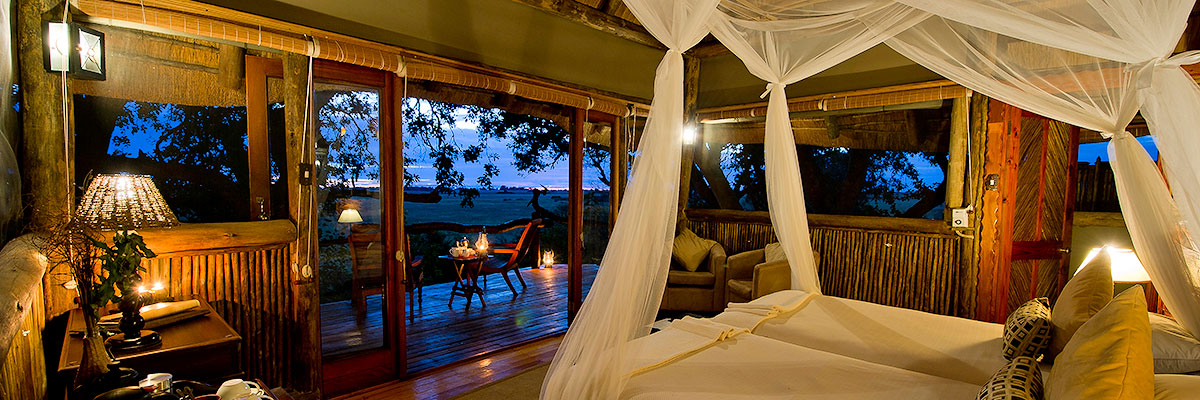
Kwetsani Island is a large, elongated island surrounded by enormous open plains in Botswana's Okavango Delta. It is located in the private Jao Reserve, an area of 60,000 hectares to the west of Mombo and the Moremi Game Reserve. The island is heavily wooded with palm, mangosteen and fig trees. The water levels around the island change each year, depending on the magnitude of the annual floods from central Africa. The water levels at Kwetsani are at their highest from April or May to September each year. Kwetsani Camp is a small, intimate, ten~bedded luxury camp and is raised on wooden decks above the lush ground vegetation. The five spacious and lavish "tree~house" chalets are built under thatched roofs and have canvas and pole walls. En suite facilities under thatch include a shower, flush toilet and basin, with an additional outdoor shower. The rooms have an open, airy feel about them, with a superb view of the surrounding plains. The dining room, lounge and pub area is situated under cool thatch.
Hippo, Sitatunga antelope and Crocodile reside in the deeper permanent lily~filled lagoons of the area. Lion, Leopard, Wild Dog, Cheetah, Tsessebe and Lechwe are among the major game attractions at Kwetsani. Nocturnal animals such as Porcupine, Aardwolf, Serval, Genet and Bushbaby can be observed on the night drives (water levels permitting). Kwetsani offers superb land and water activities ~ with much of the focus depending on the water levels from the region's annual flood. In addition to stalking game by mokoro, you will also be able to enjoy exploring palm~fringed islands on foot. Day game drives are a highlight, enabling guests to experience varied and diverse game viewing. Guests have excellent chances of spotting predators during the day as well as on night drives.
The Owners - Dave and Cathy Kays and Kingsley Mogalakwe
Cathy and David Kays and their families, and Kingsley Mogalakwe are the long~term leaseholders of Jao Reserve. The Kays are one of Maun's oldest families. David's great grandfather first came to Ngamiland in 1887. In 1912 the Kays family settled in Tsau, at that time the headquarters of the Batawana tribe (Maun was not yet founded). When the Batawana tribe decided to establish a new village at Maun and move its headquarters there in the mid~twenties, the Kays family moved with them. David's father, Ronnie, was instrumental in advising the Batawana Tribal Authorities on the formation of Moremi Game Reserve and assisted in the demarcation of the reserve's boundaries. Kingsley Mogalakwe is from a prominent and well~known Maun family. His uncle, Montsho Mogalakwe, was also instrumental in the formation of Moremi Game Reserve and has now retired from service in Maun as the deputy chief for Ngamiland. Like all families raised in and around the Okavango, wildlife was in their blood, and they spent most of their lives out in the bush. When they won the rights for the Jao Reserve in the recent tender process, they were determined to make this Botswana's finest reserve. They turned their backs on hunting, even though it is allowed in this reserve. They are only the second reserve in Botswana not to hunt, when hunting is allowed. They have decided to focus all their efforts on developing Jao into a superb photographic reserve, but in the process they lose about US$300,000 in hunting revenue every year to ensure great game viewing and a superb wildlife product in the long term. The two camps they have built ~ Jao and Kwetsani ~ are two of the top camps in the Okavango.
×
Tubu Tree
Tubu Tree
Tubu Tree Camp is a traditional style tented safari camp built on to raised wooden platforms to take best advantage of the beautiful view over the floodplains. The camp sleeps a maximum of 10 guests in 5 large and comfortable tents. The tents have a small and private deck in front. Each tent has en suite bathroom facilities, with hot and cold running water, consisting of flush toilet, handbasin, and private outdoor shower. The main dining and lounge areas are also large tents on raised platforms, with an outdoor pub area built under the canopy of a large marula tree.
Game Viewing
A variety of habitats ensures diverse and interesting game viewing, as well as spectacular birding. Wildlife seen here includes Elephant, Lion, Zebra, Red Lechwe, Giraffe, Tsessebe, and Wildebeest on the floodplains. Kudu, Impala, Leopard and Bushbuck are also seen in the forested areas. During our winter months, the water levels rise and the floodplains become covered with water, permitting water activities. The variety of bird life is impressive with dry land species seen on the large islands and all the wetland birds seen on the floodplains and waterways.
Activities
Tubu Tree Camp offers game drives with experienced guides in open 4 x 4 vehicles during the day and night, as well as walking with an armed guide. When the flood is in, boating, fishing and mokoro trips are also offered. Full day adventurous transfers by mekoros can also be undertaken during the flood season, to transfer to Jacana Camp that is a water camp in the eastern area of the Jao concession.
The Owners - Dave and Cathy Kays and Kingsley Mogalakwe
Cathy and David Kays and their families, and Kingsley Mogalakwe are the long~term leaseholders of Jao Reserve. The Kays are one of Maun's oldest families. David's great grandfather first came to Ngamiland in 1887. In 1912 the Kays family settled in Tsau, at that time the headquarters of the Batawana tribe (Maun was not yet founded). When the Batawana tribe decided to establish a new village at Maun and move its headquarters there in the mid~twenties, the Kays family moved with them. David's father, Ronnie, was instrumental in advising the Batawana Tribal Authorities on the formation of Moremi Game Reserve and assisted in the demarcation of the reserve's boundaries. Kingsley Mogalakwe is from a prominent and well~known Maun family. His uncle, Montsho Mogalakwe, was also instrumental in the formation of Moremi Game Reserve and has now retired from service in Maun as the deputy chief for Ngamiland. Like all families raised in and around the Okavango, wildlife was in their blood, and they spent most of their lives out in the bush. When they won the rights for the Jao Reserve in the recent tender process, they were determined to make this Botswana's finest reserve. They turned their backs on hunting, even though it is allowed in this reserve. They are only the second reserve in Botswana not to hunt, when hunting is allowed. They have decided to focus all their efforts on developing Jao into a superb photographic reserve, but in the process they lose about US$300,000 in hunting revenue every year to ensure great game viewing and a superb wildlife product in the long term. The two camps they have built ~ Jao and Kwetsani ~ are two of the top camps in the Okavango.
×
Xigera
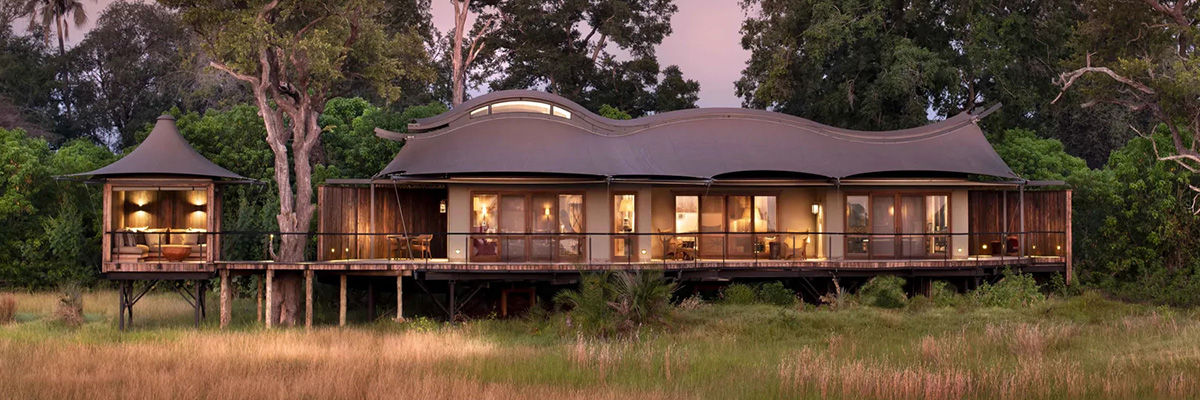
The story of Xigera Safari Lodge is one of renewal. Of rebirth and family legacy, and of the pioneering spirit that drives us to seek out Africa's wild spaces. The same spirit that inspired this remarkable reimagining, perhaps a complete reinvention, of an Okavango Delta safari. This is Xigera (pronounced 'kee-jera'), named for the Pied Kingfisher that makes its home amid the watery channels of Botswana's Moremi Game Reserve. Every aspect is handcrafted to beguile our guests' senses and stir their souls - from the evocative interiors to one-of-a-kind encounters. But Xigera is equally a line in the sand. A raising of the bar. A bold statement in the realm of luxury safaris in Botswana, and an Okavango Delta safari experience like no other. Xigera Safari Lodge is a proud part of The Red Carnation Hotel Collection.
Xigera Safari Lodge offers just 12 beautiful suites, each resting effortlessly in this wild landscape. Amid this remarkable setting, Xigera's design aesthetic is wholeheartedly dedicated to celebrating African art, design and creativity. Each piece has been handcrafted and inspired by the incredible natural surroundings in Botswana; every experience can be tailor made to your wishes� an entirely new imagining of the African bush.
×
Day 9 Okavango Delta | Meals: BLD
Days are unstructured in the Delta. Depending on the water levels, you might choose to game view by water or by land. Some camps offer game walks, a super way to gain a different insight into the wildlife of the area.
Accommodation Choices
- Okavango Delta: Chitabe Camp
Chitabe Camp
Chitabe (pronounced Chitaabee) is located in a 28000 hectare photographic reserve alongside the Moremi Game Reserve. The reserve's boundary in the east is the Gomoti Channel and the Santantadibe River in the west. The area is made up of a superb variety of habitats, which include waterways and marshlands, dry acacia and mopane woodland, riverine areas, open grasslands and seasonally flooded plains. Chitabe has the classic Okavango scenery. Chitabe offers guests game drives in open 4x4 vehicles during the day and at night, as well as nature walks. This is not a water activities camp. Chitabe has been operational since 1997 and has developed an outstanding reputation.
The camp itself is situated on one of the most beautiful islands in the Delta. Surrounded by ancient ebony, leadwood and sausage trees, Chitabe offers eight luxurious, twin-bedded, East African style tents, built on elevated wooden decks under a lush canopy of indigenous trees. Each luxury tent has en suite facilities with hot and cold running water. A separate thatched dining room, pub, lounge and pool area is linked by raised walkways. The raised decks offer superb views over the open floodplain in front of the camp.
Wildlife seen here includes Elephant, Buffalo, Lion, Leopard and Cheetah. Wild Dog are among the major game attractions of the area. Guests should also see Zebra, Reedbuck, Red Lechwe, Impala, and all the plains game. Night drives can be very rewarding, giving rare opportunities to view animals such as Pangolin, Civet Cat, Genet Cat, Porcupine and Aardwolf.
Chitabe (and Chitabe Trails) is owned by Dave and Helene Hamman, two well-known and respected characters in the Okavango. Dave and Helene have managed a number of camps in Botswana. It was during their time at Mombo that they really became enthusiastic about wild dogs. They got to know individual dogs and started to follow them on a daily basis and learnt more of their life histories, their trials and tribulations. Three years later they co-produced the book Running Wild ~ Dispelling the Myths of the African Wild Dog, the definitive book on these wonderful animals. Dave's passion for photography and his knowledge of the dogs made him the logical choice to be the cameraman for National Geographic's documentary on the wild dog of the Okavango.
They have moved on from Mombo and now have built and own Chitabe - camps which are in an area where wild dog are regularly sighted. Helene oversees the day to day operation from their Maun base, while Dave still spends much of his time on assignment with National Geographic's photographers.
Wild Dog Conservation Fund
A portion of the accommodation charges from each guest goes towards a wild dog conservation fund which Chitabe has established. Dr Tico McNutt began the wild dog research project in 1989, with a study area of about 3000 square kilometers. About 160 wild dogs in ten to twelve packs inhabit this region. Chitabe is part of this study area.
×
Jacana
Jacana
Camp Description
Jacana Camp is situated about 25kms west of Mombo, outside the Moremi Game reserve on the Jao flats - a reserve of 60,000 hectares. It is a true water camp and offers mokoro and walking safaris all year round. As the floodwaters recede game driving and night drives in open 4x4 land rovers are available from October to March. Jacana Camp has five small meru-style tents accommodating a maximum of eight guests. Each tent is on a wooden deck overlooking the floodplains and has an en suite bathroom with flush toilet and shower. The main dining area is on the top floor of an elevated wooden deck between two magnificent sycamore figs and surrounded by dense wild date palms. Downstairs, there is a cosy pub and lounge with an area for an open fire under the stars.
Game Viewing
The camp is set in one of the most densely populated wetland areas for Sitatunga and Red Lechwe. Hippos and crocodiles are regularly sited. In the dry season on the floodplains wildebeest and zebra occur and in the woodlands to the west, Elephant and Buffalo. Lions, Cheetah, Leopard and Wild Dog are occasionally sited on the floodplains. This is a prime area for wetland bird species, including Wattled Cranes, Pels Fishing Owls as well as greater and lesser Jacanas.
The Owners - Dave and Cathy Kays and Kingsley Mogalakwe
Cathy and David Kays and their families, and Kingsley Mogalakwe are the long~term leaseholders of Jao Reserve. The Kays are one of Maun's oldest families. David's great grandfather first came to Ngamiland in 1887. In 1912 the Kays family settled in Tsau, at that time the headquarters of the Batawana tribe (Maun was not yet founded). When the Batawana tribe decided to establish a new village at Maun and move its headquarters there in the mid~twenties, the Kays family moved with them. David's father, Ronnie, was instrumental in advising the Batawana Tribal Authorities on the formation of Moremi Game Reserve and assisted in the demarcation of the reserve's boundaries. Kingsley Mogalakwe is from a prominent and well~known Maun family. His uncle, Montsho Mogalakwe, was also instrumental in the formation of Moremi Game Reserve and has now retired from service in Maun as the deputy chief for Ngamiland. Like all families raised in and around the Okavango, wildlife was in their blood, and they spent most of their lives out in the bush. When they won the rights for the Jao Reserve in the recent tender process, they were determined to make this Botswana's finest reserve. They turned their backs on hunting, even though it is allowed in this reserve. They are only the second reserve in Botswana not to hunt, when hunting is allowed. They have decided to focus all their efforts on developing Jao into a superb photographic reserve, but in the process they lose about US$300,000 in hunting revenue every year to ensure great game viewing and a superb wildlife product in the long term. The two camps they have built ~ Jao and Kwetsani ~ are two of the top camps in the Okavango.
×
Kwetsani
Kwetsani Island is a large, elongated island surrounded by enormous open plains in Botswana's Okavango Delta. It is located in the private Jao Reserve, an area of 60,000 hectares to the west of Mombo and the Moremi Game Reserve. The island is heavily wooded with palm, mangosteen and fig trees. The water levels around the island change each year, depending on the magnitude of the annual floods from central Africa. The water levels at Kwetsani are at their highest from April or May to September each year. Kwetsani Camp is a small, intimate, ten~bedded luxury camp and is raised on wooden decks above the lush ground vegetation. The five spacious and lavish "tree~house" chalets are built under thatched roofs and have canvas and pole walls. En suite facilities under thatch include a shower, flush toilet and basin, with an additional outdoor shower. The rooms have an open, airy feel about them, with a superb view of the surrounding plains. The dining room, lounge and pub area is situated under cool thatch.
Hippo, Sitatunga antelope and Crocodile reside in the deeper permanent lily~filled lagoons of the area. Lion, Leopard, Wild Dog, Cheetah, Tsessebe and Lechwe are among the major game attractions at Kwetsani. Nocturnal animals such as Porcupine, Aardwolf, Serval, Genet and Bushbaby can be observed on the night drives (water levels permitting). Kwetsani offers superb land and water activities ~ with much of the focus depending on the water levels from the region's annual flood. In addition to stalking game by mokoro, you will also be able to enjoy exploring palm~fringed islands on foot. Day game drives are a highlight, enabling guests to experience varied and diverse game viewing. Guests have excellent chances of spotting predators during the day as well as on night drives.
The Owners - Dave and Cathy Kays and Kingsley Mogalakwe
Cathy and David Kays and their families, and Kingsley Mogalakwe are the long~term leaseholders of Jao Reserve. The Kays are one of Maun's oldest families. David's great grandfather first came to Ngamiland in 1887. In 1912 the Kays family settled in Tsau, at that time the headquarters of the Batawana tribe (Maun was not yet founded). When the Batawana tribe decided to establish a new village at Maun and move its headquarters there in the mid~twenties, the Kays family moved with them. David's father, Ronnie, was instrumental in advising the Batawana Tribal Authorities on the formation of Moremi Game Reserve and assisted in the demarcation of the reserve's boundaries. Kingsley Mogalakwe is from a prominent and well~known Maun family. His uncle, Montsho Mogalakwe, was also instrumental in the formation of Moremi Game Reserve and has now retired from service in Maun as the deputy chief for Ngamiland. Like all families raised in and around the Okavango, wildlife was in their blood, and they spent most of their lives out in the bush. When they won the rights for the Jao Reserve in the recent tender process, they were determined to make this Botswana's finest reserve. They turned their backs on hunting, even though it is allowed in this reserve. They are only the second reserve in Botswana not to hunt, when hunting is allowed. They have decided to focus all their efforts on developing Jao into a superb photographic reserve, but in the process they lose about US$300,000 in hunting revenue every year to ensure great game viewing and a superb wildlife product in the long term. The two camps they have built ~ Jao and Kwetsani ~ are two of the top camps in the Okavango.
×
Tubu Tree
Tubu Tree
Tubu Tree Camp is a traditional style tented safari camp built on to raised wooden platforms to take best advantage of the beautiful view over the floodplains. The camp sleeps a maximum of 10 guests in 5 large and comfortable tents. The tents have a small and private deck in front. Each tent has en suite bathroom facilities, with hot and cold running water, consisting of flush toilet, handbasin, and private outdoor shower. The main dining and lounge areas are also large tents on raised platforms, with an outdoor pub area built under the canopy of a large marula tree.
Game Viewing
A variety of habitats ensures diverse and interesting game viewing, as well as spectacular birding. Wildlife seen here includes Elephant, Lion, Zebra, Red Lechwe, Giraffe, Tsessebe, and Wildebeest on the floodplains. Kudu, Impala, Leopard and Bushbuck are also seen in the forested areas. During our winter months, the water levels rise and the floodplains become covered with water, permitting water activities. The variety of bird life is impressive with dry land species seen on the large islands and all the wetland birds seen on the floodplains and waterways.
Activities
Tubu Tree Camp offers game drives with experienced guides in open 4 x 4 vehicles during the day and night, as well as walking with an armed guide. When the flood is in, boating, fishing and mokoro trips are also offered. Full day adventurous transfers by mekoros can also be undertaken during the flood season, to transfer to Jacana Camp that is a water camp in the eastern area of the Jao concession.
The Owners - Dave and Cathy Kays and Kingsley Mogalakwe
Cathy and David Kays and their families, and Kingsley Mogalakwe are the long~term leaseholders of Jao Reserve. The Kays are one of Maun's oldest families. David's great grandfather first came to Ngamiland in 1887. In 1912 the Kays family settled in Tsau, at that time the headquarters of the Batawana tribe (Maun was not yet founded). When the Batawana tribe decided to establish a new village at Maun and move its headquarters there in the mid~twenties, the Kays family moved with them. David's father, Ronnie, was instrumental in advising the Batawana Tribal Authorities on the formation of Moremi Game Reserve and assisted in the demarcation of the reserve's boundaries. Kingsley Mogalakwe is from a prominent and well~known Maun family. His uncle, Montsho Mogalakwe, was also instrumental in the formation of Moremi Game Reserve and has now retired from service in Maun as the deputy chief for Ngamiland. Like all families raised in and around the Okavango, wildlife was in their blood, and they spent most of their lives out in the bush. When they won the rights for the Jao Reserve in the recent tender process, they were determined to make this Botswana's finest reserve. They turned their backs on hunting, even though it is allowed in this reserve. They are only the second reserve in Botswana not to hunt, when hunting is allowed. They have decided to focus all their efforts on developing Jao into a superb photographic reserve, but in the process they lose about US$300,000 in hunting revenue every year to ensure great game viewing and a superb wildlife product in the long term. The two camps they have built ~ Jao and Kwetsani ~ are two of the top camps in the Okavango.
×
Xigera
The story of Xigera Safari Lodge is one of renewal. Of rebirth and family legacy, and of the pioneering spirit that drives us to seek out Africa's wild spaces. The same spirit that inspired this remarkable reimagining, perhaps a complete reinvention, of an Okavango Delta safari. This is Xigera (pronounced 'kee-jera'), named for the Pied Kingfisher that makes its home amid the watery channels of Botswana's Moremi Game Reserve. Every aspect is handcrafted to beguile our guests' senses and stir their souls - from the evocative interiors to one-of-a-kind encounters. But Xigera is equally a line in the sand. A raising of the bar. A bold statement in the realm of luxury safaris in Botswana, and an Okavango Delta safari experience like no other. Xigera Safari Lodge is a proud part of The Red Carnation Hotel Collection.
Xigera Safari Lodge offers just 12 beautiful suites, each resting effortlessly in this wild landscape. Amid this remarkable setting, Xigera's design aesthetic is wholeheartedly dedicated to celebrating African art, design and creativity. Each piece has been handcrafted and inspired by the incredible natural surroundings in Botswana; every experience can be tailor made to your wishes� an entirely new imagining of the African bush.
×
Day 10 Okavango Delta | Meals: BLD
A final day in the Delta allows time for your choice of game viewing activity.
Accommodation Choices
- Okavango Delta: Chitabe Camp
Chitabe Camp
Chitabe (pronounced Chitaabee) is located in a 28000 hectare photographic reserve alongside the Moremi Game Reserve. The reserve's boundary in the east is the Gomoti Channel and the Santantadibe River in the west. The area is made up of a superb variety of habitats, which include waterways and marshlands, dry acacia and mopane woodland, riverine areas, open grasslands and seasonally flooded plains. Chitabe has the classic Okavango scenery. Chitabe offers guests game drives in open 4x4 vehicles during the day and at night, as well as nature walks. This is not a water activities camp. Chitabe has been operational since 1997 and has developed an outstanding reputation.
The camp itself is situated on one of the most beautiful islands in the Delta. Surrounded by ancient ebony, leadwood and sausage trees, Chitabe offers eight luxurious, twin-bedded, East African style tents, built on elevated wooden decks under a lush canopy of indigenous trees. Each luxury tent has en suite facilities with hot and cold running water. A separate thatched dining room, pub, lounge and pool area is linked by raised walkways. The raised decks offer superb views over the open floodplain in front of the camp.
Wildlife seen here includes Elephant, Buffalo, Lion, Leopard and Cheetah. Wild Dog are among the major game attractions of the area. Guests should also see Zebra, Reedbuck, Red Lechwe, Impala, and all the plains game. Night drives can be very rewarding, giving rare opportunities to view animals such as Pangolin, Civet Cat, Genet Cat, Porcupine and Aardwolf.
Chitabe (and Chitabe Trails) is owned by Dave and Helene Hamman, two well-known and respected characters in the Okavango. Dave and Helene have managed a number of camps in Botswana. It was during their time at Mombo that they really became enthusiastic about wild dogs. They got to know individual dogs and started to follow them on a daily basis and learnt more of their life histories, their trials and tribulations. Three years later they co-produced the book Running Wild ~ Dispelling the Myths of the African Wild Dog, the definitive book on these wonderful animals. Dave's passion for photography and his knowledge of the dogs made him the logical choice to be the cameraman for National Geographic's documentary on the wild dog of the Okavango.
They have moved on from Mombo and now have built and own Chitabe - camps which are in an area where wild dog are regularly sighted. Helene oversees the day to day operation from their Maun base, while Dave still spends much of his time on assignment with National Geographic's photographers.
Wild Dog Conservation Fund
A portion of the accommodation charges from each guest goes towards a wild dog conservation fund which Chitabe has established. Dr Tico McNutt began the wild dog research project in 1989, with a study area of about 3000 square kilometers. About 160 wild dogs in ten to twelve packs inhabit this region. Chitabe is part of this study area.
×
Jacana
Jacana
Camp Description
Jacana Camp is situated about 25kms west of Mombo, outside the Moremi Game reserve on the Jao flats - a reserve of 60,000 hectares. It is a true water camp and offers mokoro and walking safaris all year round. As the floodwaters recede game driving and night drives in open 4x4 land rovers are available from October to March. Jacana Camp has five small meru-style tents accommodating a maximum of eight guests. Each tent is on a wooden deck overlooking the floodplains and has an en suite bathroom with flush toilet and shower. The main dining area is on the top floor of an elevated wooden deck between two magnificent sycamore figs and surrounded by dense wild date palms. Downstairs, there is a cosy pub and lounge with an area for an open fire under the stars.
Game Viewing
The camp is set in one of the most densely populated wetland areas for Sitatunga and Red Lechwe. Hippos and crocodiles are regularly sited. In the dry season on the floodplains wildebeest and zebra occur and in the woodlands to the west, Elephant and Buffalo. Lions, Cheetah, Leopard and Wild Dog are occasionally sited on the floodplains. This is a prime area for wetland bird species, including Wattled Cranes, Pels Fishing Owls as well as greater and lesser Jacanas.
The Owners - Dave and Cathy Kays and Kingsley Mogalakwe
Cathy and David Kays and their families, and Kingsley Mogalakwe are the long~term leaseholders of Jao Reserve. The Kays are one of Maun's oldest families. David's great grandfather first came to Ngamiland in 1887. In 1912 the Kays family settled in Tsau, at that time the headquarters of the Batawana tribe (Maun was not yet founded). When the Batawana tribe decided to establish a new village at Maun and move its headquarters there in the mid~twenties, the Kays family moved with them. David's father, Ronnie, was instrumental in advising the Batawana Tribal Authorities on the formation of Moremi Game Reserve and assisted in the demarcation of the reserve's boundaries. Kingsley Mogalakwe is from a prominent and well~known Maun family. His uncle, Montsho Mogalakwe, was also instrumental in the formation of Moremi Game Reserve and has now retired from service in Maun as the deputy chief for Ngamiland. Like all families raised in and around the Okavango, wildlife was in their blood, and they spent most of their lives out in the bush. When they won the rights for the Jao Reserve in the recent tender process, they were determined to make this Botswana's finest reserve. They turned their backs on hunting, even though it is allowed in this reserve. They are only the second reserve in Botswana not to hunt, when hunting is allowed. They have decided to focus all their efforts on developing Jao into a superb photographic reserve, but in the process they lose about US$300,000 in hunting revenue every year to ensure great game viewing and a superb wildlife product in the long term. The two camps they have built ~ Jao and Kwetsani ~ are two of the top camps in the Okavango.
×
Kwetsani
Kwetsani Island is a large, elongated island surrounded by enormous open plains in Botswana's Okavango Delta. It is located in the private Jao Reserve, an area of 60,000 hectares to the west of Mombo and the Moremi Game Reserve. The island is heavily wooded with palm, mangosteen and fig trees. The water levels around the island change each year, depending on the magnitude of the annual floods from central Africa. The water levels at Kwetsani are at their highest from April or May to September each year. Kwetsani Camp is a small, intimate, ten~bedded luxury camp and is raised on wooden decks above the lush ground vegetation. The five spacious and lavish "tree~house" chalets are built under thatched roofs and have canvas and pole walls. En suite facilities under thatch include a shower, flush toilet and basin, with an additional outdoor shower. The rooms have an open, airy feel about them, with a superb view of the surrounding plains. The dining room, lounge and pub area is situated under cool thatch.
Hippo, Sitatunga antelope and Crocodile reside in the deeper permanent lily~filled lagoons of the area. Lion, Leopard, Wild Dog, Cheetah, Tsessebe and Lechwe are among the major game attractions at Kwetsani. Nocturnal animals such as Porcupine, Aardwolf, Serval, Genet and Bushbaby can be observed on the night drives (water levels permitting). Kwetsani offers superb land and water activities ~ with much of the focus depending on the water levels from the region's annual flood. In addition to stalking game by mokoro, you will also be able to enjoy exploring palm~fringed islands on foot. Day game drives are a highlight, enabling guests to experience varied and diverse game viewing. Guests have excellent chances of spotting predators during the day as well as on night drives.
The Owners - Dave and Cathy Kays and Kingsley Mogalakwe
Cathy and David Kays and their families, and Kingsley Mogalakwe are the long~term leaseholders of Jao Reserve. The Kays are one of Maun's oldest families. David's great grandfather first came to Ngamiland in 1887. In 1912 the Kays family settled in Tsau, at that time the headquarters of the Batawana tribe (Maun was not yet founded). When the Batawana tribe decided to establish a new village at Maun and move its headquarters there in the mid~twenties, the Kays family moved with them. David's father, Ronnie, was instrumental in advising the Batawana Tribal Authorities on the formation of Moremi Game Reserve and assisted in the demarcation of the reserve's boundaries. Kingsley Mogalakwe is from a prominent and well~known Maun family. His uncle, Montsho Mogalakwe, was also instrumental in the formation of Moremi Game Reserve and has now retired from service in Maun as the deputy chief for Ngamiland. Like all families raised in and around the Okavango, wildlife was in their blood, and they spent most of their lives out in the bush. When they won the rights for the Jao Reserve in the recent tender process, they were determined to make this Botswana's finest reserve. They turned their backs on hunting, even though it is allowed in this reserve. They are only the second reserve in Botswana not to hunt, when hunting is allowed. They have decided to focus all their efforts on developing Jao into a superb photographic reserve, but in the process they lose about US$300,000 in hunting revenue every year to ensure great game viewing and a superb wildlife product in the long term. The two camps they have built ~ Jao and Kwetsani ~ are two of the top camps in the Okavango.
×
Tubu Tree
Tubu Tree
Tubu Tree Camp is a traditional style tented safari camp built on to raised wooden platforms to take best advantage of the beautiful view over the floodplains. The camp sleeps a maximum of 10 guests in 5 large and comfortable tents. The tents have a small and private deck in front. Each tent has en suite bathroom facilities, with hot and cold running water, consisting of flush toilet, handbasin, and private outdoor shower. The main dining and lounge areas are also large tents on raised platforms, with an outdoor pub area built under the canopy of a large marula tree.
Game Viewing
A variety of habitats ensures diverse and interesting game viewing, as well as spectacular birding. Wildlife seen here includes Elephant, Lion, Zebra, Red Lechwe, Giraffe, Tsessebe, and Wildebeest on the floodplains. Kudu, Impala, Leopard and Bushbuck are also seen in the forested areas. During our winter months, the water levels rise and the floodplains become covered with water, permitting water activities. The variety of bird life is impressive with dry land species seen on the large islands and all the wetland birds seen on the floodplains and waterways.
Activities
Tubu Tree Camp offers game drives with experienced guides in open 4 x 4 vehicles during the day and night, as well as walking with an armed guide. When the flood is in, boating, fishing and mokoro trips are also offered. Full day adventurous transfers by mekoros can also be undertaken during the flood season, to transfer to Jacana Camp that is a water camp in the eastern area of the Jao concession.
The Owners - Dave and Cathy Kays and Kingsley Mogalakwe
Cathy and David Kays and their families, and Kingsley Mogalakwe are the long~term leaseholders of Jao Reserve. The Kays are one of Maun's oldest families. David's great grandfather first came to Ngamiland in 1887. In 1912 the Kays family settled in Tsau, at that time the headquarters of the Batawana tribe (Maun was not yet founded). When the Batawana tribe decided to establish a new village at Maun and move its headquarters there in the mid~twenties, the Kays family moved with them. David's father, Ronnie, was instrumental in advising the Batawana Tribal Authorities on the formation of Moremi Game Reserve and assisted in the demarcation of the reserve's boundaries. Kingsley Mogalakwe is from a prominent and well~known Maun family. His uncle, Montsho Mogalakwe, was also instrumental in the formation of Moremi Game Reserve and has now retired from service in Maun as the deputy chief for Ngamiland. Like all families raised in and around the Okavango, wildlife was in their blood, and they spent most of their lives out in the bush. When they won the rights for the Jao Reserve in the recent tender process, they were determined to make this Botswana's finest reserve. They turned their backs on hunting, even though it is allowed in this reserve. They are only the second reserve in Botswana not to hunt, when hunting is allowed. They have decided to focus all their efforts on developing Jao into a superb photographic reserve, but in the process they lose about US$300,000 in hunting revenue every year to ensure great game viewing and a superb wildlife product in the long term. The two camps they have built ~ Jao and Kwetsani ~ are two of the top camps in the Okavango.
×
Xigera
The story of Xigera Safari Lodge is one of renewal. Of rebirth and family legacy, and of the pioneering spirit that drives us to seek out Africa's wild spaces. The same spirit that inspired this remarkable reimagining, perhaps a complete reinvention, of an Okavango Delta safari. This is Xigera (pronounced 'kee-jera'), named for the Pied Kingfisher that makes its home amid the watery channels of Botswana's Moremi Game Reserve. Every aspect is handcrafted to beguile our guests' senses and stir their souls - from the evocative interiors to one-of-a-kind encounters. But Xigera is equally a line in the sand. A raising of the bar. A bold statement in the realm of luxury safaris in Botswana, and an Okavango Delta safari experience like no other. Xigera Safari Lodge is a proud part of The Red Carnation Hotel Collection.
Xigera Safari Lodge offers just 12 beautiful suites, each resting effortlessly in this wild landscape. Amid this remarkable setting, Xigera's design aesthetic is wholeheartedly dedicated to celebrating African art, design and creativity. Each piece has been handcrafted and inspired by the incredible natural surroundings in Botswana; every experience can be tailor made to your wishes� an entirely new imagining of the African bush.
×
Day 11 Okavango Delta-Depart | Meals: B
Bid farewell to this amazing labyrinth of channels as your light aircraft flight takes you to Maun where you continue to Johannesburg and then overnight to London.
Day 12 Arrive USA
Arrive in London this morning and connect to your flight to the USA, arriving back later today.